Chapter Two
Wildlife didn't return to Segera by chance. It returned because the land had somewhere to go back to — corridors reopened, ground restored, and in 2025, for the first time in sixty years, rhino.
Every species on this page is here because of decisions made on The Land — fences dropped, corridors reopened, ground reforested. The Return isn't a separate conservation program. It's what The Land's recovery looks like, once you can see it moving.
Lion, leopard, elephant, buffalo, and now rhino share the same 50,000 acres — not fenced into separate viewing areas, but moving across a landscape reconnected to the wider Ewaso ecosystem.
The Big Five, alongside four of Kenya's most threatened species — each with its own story, and its own place on the conservancy.
Present across the conservancy's core territory.
Most often seen at dusk, along the riverine treeline.
Uses the reopened corridors to move beyond conservancy lines.
Herds have grown steadily since grazing land was restored.
Returned to this land in 2025, after 60 years absent.
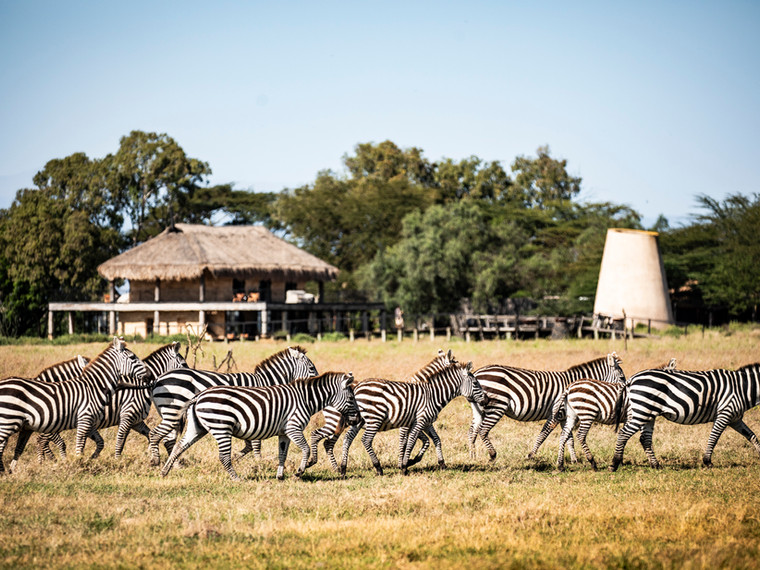
One of the world's most threatened zebra species.
Distinguished by its sharply defined coat pattern.
Among the rarest antelope species in East Africa.
One of Africa's most endangered carnivores.
In 2025, Segera welcomed a founding community of Eastern Black Rhino into its new sanctuary — the first time this exact ground had held a rhino in six decades. It's the single clearest proof that the restoration is working, not theoretical.
A dedicated ranger and anti-poaching unit monitors the conservancy year-round — the least visible part of this chapter, and the reason any of the rest of it is still here to see.
Where the recovery this chapter depends on actually began.
Read the Story
Wildlife recovery only lasts with a community invested in it too.
Meet the Community
See exactly where the sanctuary and each species sit.
Open the Map
Every sighting on this page is a stay away — not a coincidence, but the direct result of it.
Plan Your Stay